Restaurant local SEO connects discovery with the decision to visit. Keep your Google Business Profile, menus, opening hours and booking links accurate across platforms, and give diners clear information about the right branch, prices and what to expect.
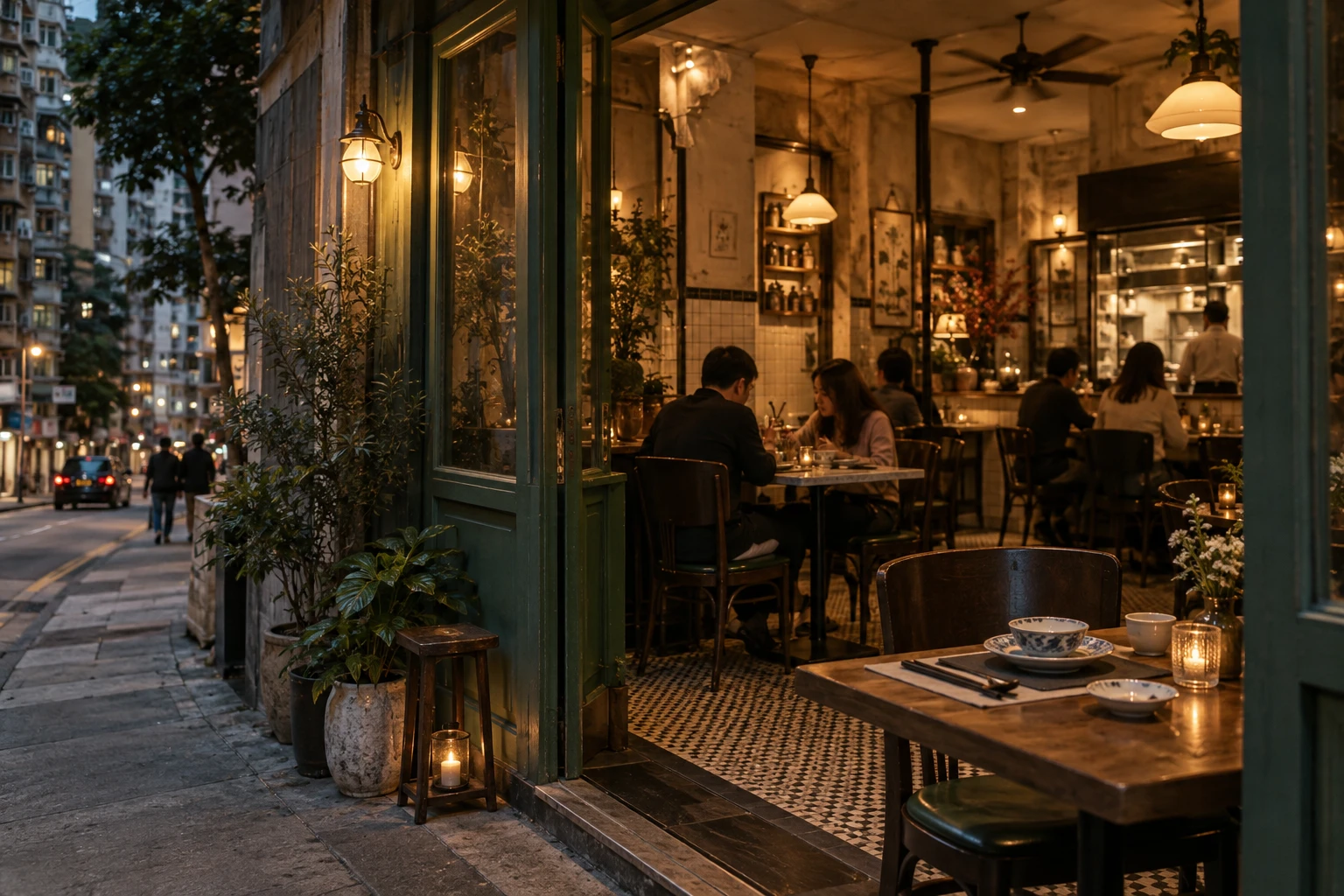
A diner finds your restaurant, likes the look of the food and opens the menu. The prices are missing. The opening hours differ from those on Google. The booking button leads to another branch. Each uncertainty creates another reason to keep looking.
Local SEO helps diners find your restaurant and decide whether to visit. Keep the search result, menu, reviews, directions and reservation process accurate and connected.
Help diners move from search to visit
- 01 · DiscoverFind a place
Search, Maps, OpenRice or a social post.
- 02 · AssessPicture the visit
Menu, prices, photographs and reviews.
- 03 · BookConfirm the details
The right branch, availability and terms.
- 04 · ArriveReach the table
Accurate hours, address and entrance.
An illustrative journey. Diners may move between platforms or visit without booking.
Hong Kong had 16,876 full restaurant licences at the end of 2025, according to the Food and Environmental Hygiene Department. The chart below defines what that count includes.
Restaurant licences, 2022–2025
Full restaurant licences in force at 31 December each year, combining general, light refreshment and marine restaurants.
A licence count, not a count of every place to eat. Provisional licences and other food-business categories are excluded. A change in the total is not the number of openings or closures.
View the full data and source
| Year | General | Light refreshment | Marine | Total |
|---|---|---|---|---|
| 2022 | 12,630 | 4,280 | 6 | 16,916 |
| 2023 | 12,830 | 4,350 | 5 | 17,185 |
| 2024 | 12,707 | 4,375 | 5 | 17,087 |
| 2025 | 12,474 | 4,397 | 5 | 16,876 |
Source: FEHD, Pleasant Environment Statistics 2022–2025. Totals calculated by adding the three categories. All bars start at zero and use the same scale. Checked 14 September 2026.
Start with the diners you serve: an office worker finding lunch, a family arranging dinner or a visitor planning a celebration. Each needs different information before choosing you.
Understand what affects local visibility
Google describes local ranking through relevance, distance and prominence. Complete profiles help establish relevance; location, links, reviews and how well known the business is also matter. Maps rankings vary by searcher, and no profile edit guarantees a position.
Maps results, website results and paid placements have different visibility and measurement. Track them separately.
Target the right dining needs
Choose searches that match your cuisine, dishes, location, price or setting. A popular keyword is only useful if your restaurant can meet the expectation behind it.
A search is a question in shorthand.
Explore what different dining needs ask of your content.
Be precise about what is on the menu.
A diner needs to know which dishes meet their requirements, whether adaptations are possible and which branch serves them.
Use a current menu with clear descriptions. Distinguish a vegetarian restaurant, vegan options and an entirely vegan menu. Confirm ingredients and preparation questions with the restaurant.
Search data and interpretation
English phrase: 40. Chinese phrase: 170.
These phrases have different meanings. Their estimates are not a valid English-versus-Chinese demand comparison.
Google Keyword Planner, Hong Kong, Google Search only. Separate English and Traditional Chinese settings; September 2025–August 2026 historical window. Figures are rounded average monthly searches and can include overlapping close variants. Research retrieved 14 September 2026. They are estimates, not a traffic forecast.
Show the experience. Explain the conditions.
Someone planning a celebration may care as much about the view, seating and booking conditions as the cuisine.
Show representative photographs and explain any table restrictions. A restaurant with a harbour view should not imply that every reservation includes a window seat.
Search data and interpretation
Chinese phrase: 10. The English phrase is an illustrative theme; no volume is supplied.
This is a specific intent example, not a recommendation to create multiple near-identical occasion pages.
Google Keyword Planner, Hong Kong, Google Search only. Separate English and Traditional Chinese settings; September 2025–August 2026 historical window. Figures are rounded average monthly searches and can include overlapping close variants. Research retrieved 14 September 2026. They are estimates, not a traffic forecast.
Make the branch easy to assess and find.
A broad district search leaves the diner with several decisions: cuisine, price, opening time and the practical journey from the street to the table.
Give the actual address, floor and unit, service hours, current menu and entrance directions. Link directly to the correct branch’s booking option.
Search data and interpretation
English phrase: 6,600. No estimate is supplied for the Chinese illustration.
A larger search estimate does not make this the best target for every restaurant. The results may include directories and editorial lists.
Google Keyword Planner, Hong Kong, Google Search only. Separate English and Traditional Chinese settings; September 2025–August 2026 historical window. Figures are rounded average monthly searches and can include overlapping close variants. Research retrieved 14 September 2026. They are estimates, not a traffic forecast.
Research English, Traditional Chinese and mixed-language expressions separately. Translations may express different needs. Group relevant place-name variants such as “TST”, “Tsim Sha Tsui” and “尖沙咀” on one useful page.
Use Keyword Planner for historical demand estimates; advertiser competition is not SEO difficulty. Check the search results and your Search Console queries, which are not exhaustive. The keyword-clustering guide explains how to group related needs into pages.
Get each branch’s Google Business Profile right
Keep business ownership of the profile account and assign someone to maintain each branch’s details.
Use the name customers recognise from the restaurant’s signage and branding. Select appropriate categories, correct the location pin and provide the full address. Adding cuisine or district keywords to the name simply to rank is not a sound substitute for accurate information; Google’s business-representation rules require the real-world identity.
Check it as someone arriving for the first time.
- Does the map lead to the correct building and entrance?
- Are the floor and unit clear for an upstairs restaurant?
- Does the telephone reach this branch?
- Do the menu and reservation links lead to this location?
- Are lunch, dinner and any afternoon closure represented accurately?
- Do the photographs still show the food and setting a guest can expect?
Use a profile for each genuine branch. Do not create duplicates for nearby districts.
Keep service hours and exceptions separate
Show lunch and dinner periods separately when the restaurant closes between them. Maintain holiday special hours, even when unchanged; service-specific hours may need separate treatment. Update booking capacity and other listings together.
Check the menu and business-link options available to your profile. Features vary by account and provider.
Keep OpenRice and other relevant listings accurate
Keep OpenRice information and supported booking functions aligned with your operations. Paid platform exposure does not buy better organic Google rankings.
Use the merchant guide to maintain hours, payment methods and English/Chinese dish names. Check service periods, seats and special arrangements against its booking-capacity guidance.
Keep one branch record for names, address, telephone, hours, menu and reservation links. Use it to update your website, Google and OpenRice when anything changes.
Add specialist directories where they serve your diners; every extra listing creates another maintenance task.
Make menus and branch pages useful
Prioritise the current menu, clear prices, branch details and booking route before starting a blog schedule.
State lunch and dinner differences, seasonal dates, service charges and advance-notice requirements.
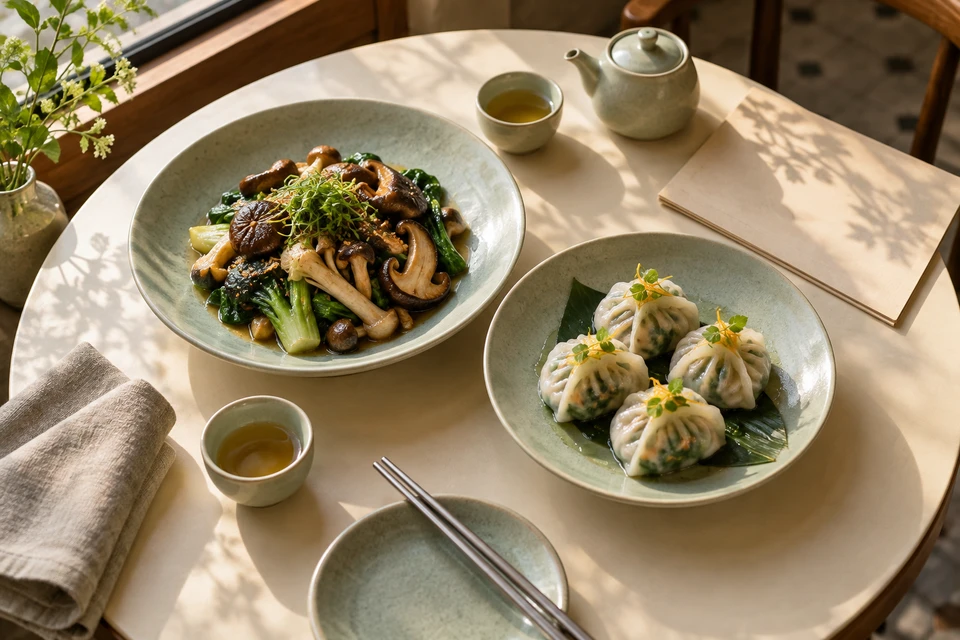
Make the menu comfortable to use on a phone
An HTML menu makes dishes and prices easier to read on a phone. Keep a PDF download if useful: Google can index PDFs. Improve the format for customers, not because PDFs are invisible to search.
Support written descriptions with photographs, useful alt text and practical image sizes. Keep the branch and booking links easy to find.
Give each location its own useful information
A branch page should describe that branch: its address, entrance, hours, menu differences and reservation options. Sangeetha’s Central page, for example, publishes branch details and distinguishes a vegetarian offering from vegan options available on request. The useful principle is specificity; the page is a public content example, not evidence of a measured SEO result.
Check that footers and floating booking buttons also lead to the correct branch. Avoid near-identical district pages without a genuine location or distinct information.
Maintain the languages your customers need
Translate dietary information, booking conditions and directions carefully. For substantial bilingual content, use separate language URLs, appropriate annotations and visible language links. Let diners choose their language.
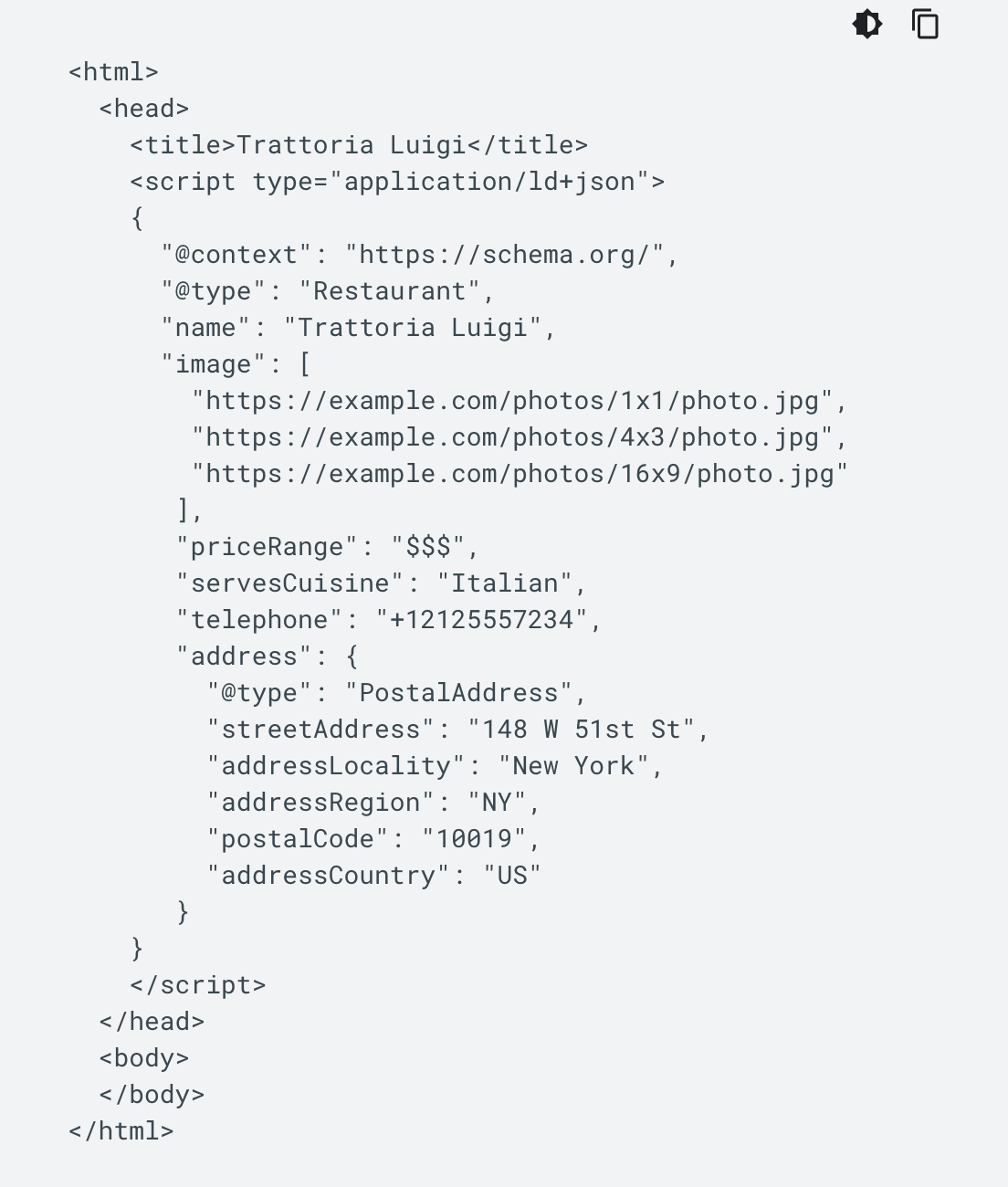
Technical essentials and Google’s structured-data example
Use crawlable links, descriptive titles, readable mobile layouts and working forms. Improve slow or unstable pages, while remembering that good performance scores do not guarantee rankings.
Accurate Restaurant structured data can describe the actual business and its menu URL. It should agree with the visible page. Adding copied ratings does not automatically earn review stars: Google’s rules exclude self-serving local-business review snippets, including those supplied through an embedded review widget.
Google’s AI search features require no additional technical setup beyond relevant Search eligibility requirements. Inclusion is not guaranteed; other AI services may differ.
Invite honest reviews and act on them
Read reviews for recurring gaps between what diners expected and what they experienced.
Invite customers to share an honest experience without screening for satisfaction first. Google allows review links and QR codes, but its contribution policy prohibits incentives and selectively soliciting positive reviews. A simple invitation is enough: “If you would like to share your experience, you can leave a review here.”
Respond to the issue and correct what caused it: an outdated menu photograph, unclear directions or a service problem. Move personal booking details to a private conversation.
Report actual policy violations. Negative feedback alone is not a violation; genuine service problems need attention.
Make booking straightforward, then measure what happens
Test booking on a phone, including the handoff to an external provider. Make the branch, confirmation status and conditions clear.
Make material conditions easy to find: cancellation terms, deposits where applicable, group arrangements and any limitation on table requests. Hutong’s general FAQ explains that window seating is subject to availability. aqua’s reservation page publishes cancellation and table-holding conditions. These are useful examples of information that shapes expectations before arrival; individual offers may have their own terms.
Offer phone or WhatsApp enquiries if the team can handle them, and explain how confirmation works. Include these bookings and walk-ins when assessing business results.
Keep interest, reservations and attendance separate
| Measure | Useful evidence | Not proof of |
|---|---|---|
| Search impressions and clicks | Website visibility and search visits | All Maps activity or restaurant revenue |
| Menu views and call clicks | Interest and attempted contact | An answered call or reservation |
| Directions requests | Someone seeking a route | Arrival at the restaurant |
| Booking-link clicks | Movement towards a booking option | A completed booking |
| Confirmed reservations | Bookings recorded by the provider or team | Attendance or actual spend |
| Seated covers and revenue | Recorded restaurant outcomes | Revenue caused by SEO without attribution evidence |
Use the definitions of the tools you actually have. Google Business Profile counts call-button clicks, not answered calls; supported booking reporting depends on the provider. OpenRice’s booking records can distinguish bookings entered from phone enquiries and those from its system. These are different views of activity, not totals to add indiscriminately.
An outbound click is measurable on your website; a completed third-party booking needs compatible integration and access. Google’s cross-domain guidance explains shared tagging requirements. Adding a domain to a setting alone will not expose its bookings.
Compare equal periods, noting changes in hours, promotions, menus and availability. Use explicit attribution rules when linking bookings to attendance or sales, and exclude personal diner information from general analytics reports.
What to improve first
Assign an owner to keep menus, hours and booking arrangements current across the places diners use.
Fix information that sends diners the wrong way.
Correct addresses, opening hours, prices and broken menu or reservation links. Test each branch’s route from discovery to contact.
Answer the questions behind the search.
Improve menu descriptions, location pages, language content and photographs. Explain the conditions that affect a visit.
Connect feedback with what you change.
Review search activity, bookings and service feedback. Check again before holidays and menu launches, and after operational changes.
Choose the next improvement from a real gap in the diner’s journey. There is no universal quota for posts, photographs or reviews.
Make the path to a visit clearer.
If diners are finding your restaurant but struggling to assess it or book, I can help review the search journey, content and measurement across your website and key listings.
Discuss your restaurant’s search presence
Show the food, setting and entrance
Plan images around three decisions: what to eat, what the setting feels like and how to find the entrance.
Google’s business-photo guidance specifically describes the role of exterior images in recognition and food photographs in dining decisions. A brief walkthrough can serve a similar practical purpose, especially where the route from the street is not obvious.
Link posts about a dish or occasion to its current menu or branch page, so interested viewers can book without searching again.
Distinguish restaurant content, independent customer posts and paid creator work. Obtain permission to reuse others’ images. Likes and video views are not direct Google ranking signals or evidence of visits.